Book Appointment Now

I. Introduction
- Importance of incorporating visuals in English learning for Grade 2 students.
- Overview of the article’s content.
II. Basic Vocabulary with Pictures
- Animals (cat, dog, bird, fish, etc.) – Include images of each animal.
- Fruits (apple, banana, orange, grape, etc.) – Include images of each fruit.
- Vegetables (carrot, tomato, potato, etc.) – Include images of each vegetable.
- Colors (red, blue, green, yellow, etc.) – Include images representing each color.
- Shapes (circle, square, triangle, etc.) – Include images of each shape.
III. Simple Sentences with Pictures
- Subject-Verb-Object (SVO) sentence structures.
- Example: The cat eats fish. (Picture of a cat eating fish)
- Example: The bird sings a song. (Picture of a bird singing)
- Example: The boy plays with a ball. (Picture of a boy playing with a ball)
- Use of action verbs with corresponding pictures.
- Example: Jump! (Picture of a child jumping)
- Example: Run! (Picture of a child running)
- Example: Sleep! (Picture of a child sleeping)
- Wh- questions with pictures.
- Example: What is this? (Picture of an apple) – Answer: It’s an apple.
- Example: Where is the ball? (Picture of a ball in a box) – Answer: It’s in the box.
- Example: Who is that? (Picture of a girl) – Answer: That’s a girl.
IV. Simple Stories with Pictures
- Short stories with simple vocabulary and sentence structures.
- Example: The Little Red Hen (with pictures depicting each part of the story).
- Example: The Three Little Pigs (with pictures depicting each part of the story). Provide simple sentences under each image to support the story.
V. Activities and Games with Pictures
- Matching games: Match words to pictures.
- Labeling activities: Label pictures with corresponding words.
- Coloring pages with vocabulary words.
- Simple sentence building activities using picture cards.
VI. Conclusion
- Reiterate the importance of using visuals in English language learning for Grade 2 students.
- Encourage teachers and parents to utilize various visual aids to enhance learning.
I. Introduction
Learning a new language can be challenging, especially for young learners. For Grade 2 students, making English learning engaging and fun is crucial for building a strong foundation. One effective strategy is incorporating visual aids, such as pictures and illustrations. Pictures help children understand new vocabulary and grammatical concepts more easily, making the learning process more enjoyable and effective. This article provides examples of how to integrate pictures into English language learning for Grade 2 students, covering vocabulary, sentence structures, simple stories, and interactive activities.
II. Basic Vocabulary with Pictures
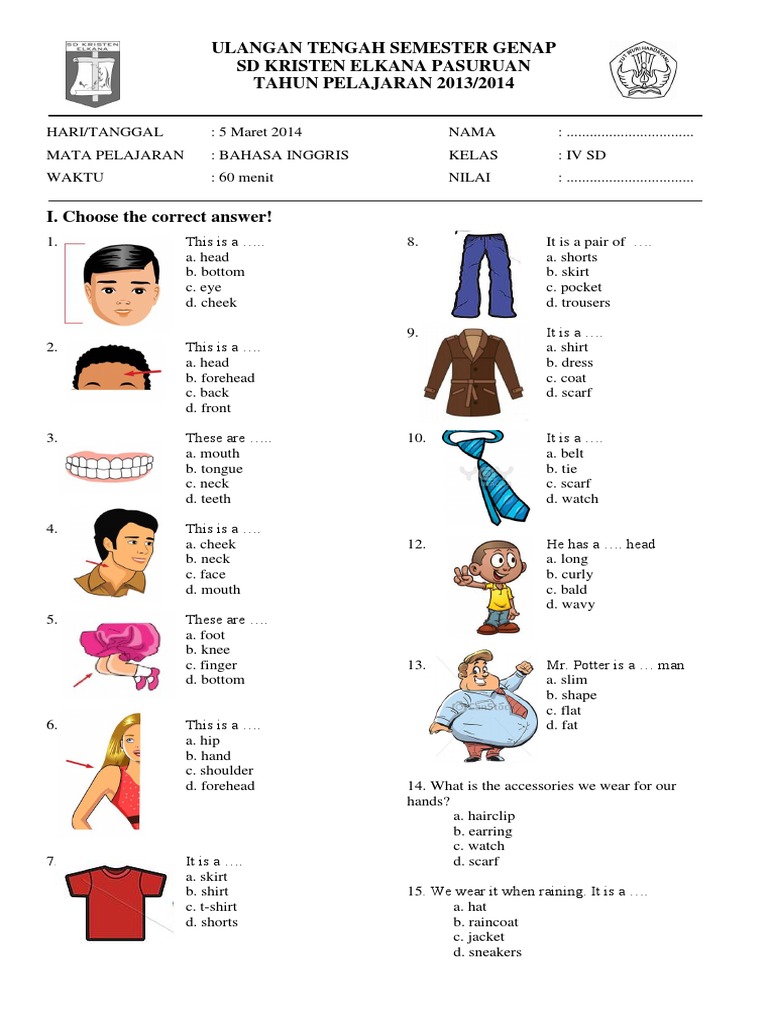
Learning basic vocabulary is the cornerstone of any language acquisition process. For Grade 2 students, associating words with images is highly beneficial.
- Animals:
[Insert picture of a cat] – Cat
[Insert picture of a dog] – Dog
[Insert picture of a bird] – Bird
[Insert picture of a fish] – Fish
[Insert picture of a monkey] – Monkey
- Fruits:
[Insert picture of an apple] – Apple
[Insert picture of a banana] – Banana
[Insert picture of an orange] – Orange
[Insert picture of grapes] – Grapes
[Insert picture of a strawberry] – Strawberry
- Vegetables:
[Insert picture of a carrot] – Carrot
[Insert picture of a tomato] – Tomato
[Insert picture of a potato] – Potato
[Insert picture of a cucumber] – Cucumber
[Insert picture of a broccoli] – Broccoli
- Colors:
[Insert picture of a red apple] – Red
[Insert picture of a blue ball] – Blue
[Insert picture of green grass] – Green
[Insert picture of a yellow sun] – Yellow
[Insert picture of a purple flower] – Purple
- Shapes:
[Insert picture of a circle] – Circle
[Insert picture of a square] – Square
[Insert picture of a triangle] – Triangle
[Insert picture of a rectangle] – Rectangle
[Insert picture of a star] – Star
III. Simple Sentences with Pictures
Once students have grasped basic vocabulary, they can begin to form simple sentences. Using pictures to illustrate these sentences provides a clear visual context.
- Subject-Verb-Object (SVO):
[Insert picture of a cat eating fish] – The cat eats fish.
[Insert picture of a bird singing] – The bird sings a song.
[Insert picture of a boy playing with a ball] – The boy plays with a ball.
[Insert picture of a girl drinking milk] – The girl drinks milk.
[Insert picture of a dog sleeping] – The dog sleeps.
- Action Verbs:
[Insert picture of a child jumping] – Jump!
[Insert picture of a child running] – Run!
[Insert picture of a child sleeping] – Sleep!
[Insert picture of a child eating] – Eat!
[Insert picture of a child singing] – Sing!
- Wh- Questions:
[Insert picture of an apple] – What is this? (Answer: It’s an apple.)
[Insert picture of a ball in a box] – Where is the ball? (Answer: It’s in the box.)
[Insert picture of a girl] – Who is that? (Answer: That’s a girl.)
[Insert picture of a boy eating an apple] – What is the boy eating? (Answer: He’s eating an apple.)
[Insert picture of a red car] – What color is the car? (Answer: It’s red.)
IV. Simple Stories with Pictures
Simple stories with accompanying pictures are a great way to improve comprehension and vocabulary.
-
The Little Red Hen: (Include a series of pictures depicting the hen finding the wheat, planting it, harvesting it, and making bread, showing each step with simple sentences beneath each image.) For example: [Picture of hen finding wheat] The hen found some wheat. [Picture of hen planting wheat] The hen planted the wheat. And so on…
-
The Three Little Pigs: (Include a series of pictures depicting the pigs building their houses, the wolf huffing and puffing, and the consequences. Use simple sentences under each image to describe the action.) For example: [Picture of pig building a straw house] The pig built a house of straw. [Picture of wolf huffing and puffing] The wolf huffed and puffed.
V. Activities and Games with Pictures
Interactive activities enhance engagement and retention.
-
Matching Games: Create flashcards with pictures and corresponding words. Students match the picture with the correct word.
-
Labeling Activities: Provide pictures of objects and have students label them with the correct words.
-
Coloring Pages: Use coloring pages with vocabulary words. Students color the pictures while reinforcing the vocabulary.
-
Simple Sentence Building Activities: Use picture cards to help students build simple sentences.
VI. Conclusion
Incorporating visuals into English language learning for Grade 2 students is a highly effective method for enhancing comprehension, vocabulary acquisition, and overall engagement. By utilizing pictures in various ways – from illustrating vocabulary to telling stories and conducting interactive games – teachers and parents can create a fun and effective learning environment that fosters a positive attitude towards English language learning. The use of visual aids makes learning accessible and enjoyable, paving the way for a solid foundation in English for young learners. Remember to use bright, clear images and keep the vocabulary and sentence structures simple and age-appropriate.